In our human history, people have been very interested in understanding nature and its mysteries since ancient times and science has made it possible. Science is the only way people can know nature closely, we can understand it, we can feel it, we can listen to what nature wants to say to us, because nature keeps telling us something or the other all the time. But his language is different, not everyone can understand it. It would also not be wrong to say that the language of science is the language of nature and since ancient times scientists have understood the language of nature and conveyed it to the common people in simple words. These scientists of history have laid the foundation of today’s modern science.
Galileo Galilei
01.
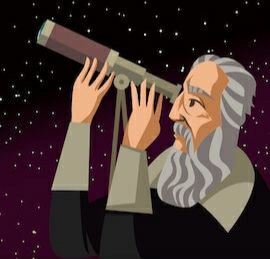
Galileo’s observations strengthened his belief in Copernicus’ theory that Earth and all other planets revolve around the Sun. Most people in Galileo’s time believed that the Earth was the center of the universe and that the Sun and planets revolved around it. … Galileo was sentenced to life imprisonment in 1633.
One day Galileo was praying in the church when he saw him there. There is a chandelier in the church that was shaken by the wind. Galileo was surprised to see him because he found it when he studied the chandelier carefully. There were oscillations in the chandelier. They were happening at exactly the same time. That is, whether the length of the oscillations was large or small, each oscillation was taking equal time to complete and they identified the time of those oscillations by their vein. Galileo came from the church and conducted an experiment to check this observation. In which he took the help of a pendulum. Swing that pendulum right left and then he got the same result as was found in the church.When he told this to a professor, the professor got angry at him. Because at that time it was believed that a small oscillation is completed in less time than a large oscillation. And the professor denied his point by telling Galileo this. It was only a theory though. And then later this experiment of Galileo was considered correct. Then the old theories were proved wrong. Galileo would do the experimental first and write the theory on the basis of that experimental. Which at that time he was the first scientist to do so. This was the time when mankind came to know that a galaxy bigger than our galaxy is present in this universe.
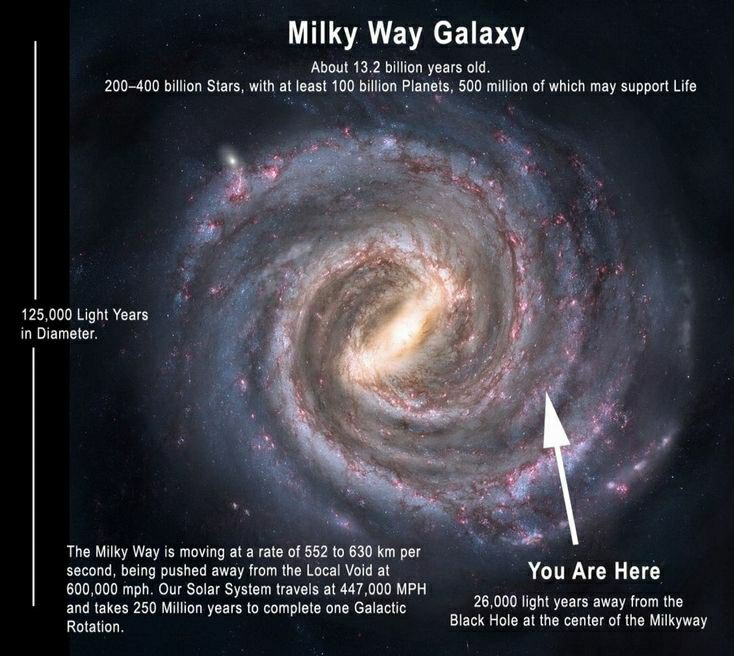
And then the man got a deep shock. Because till then not everyone knew this. The galaxy in which our solar system is located is the largest, but this illusion has also been broken. And after that the people had only one happiness. The Sun and other planets in the solar system of the Earth in which they live on Earth revolve around it. But Galileo also put an end to this pride of human.
Galileo said that the Earth revolves around the Sun, not that the Sun and other planets revolve around the Earth.
When people came to know about this, people started calling Galileo good and bad, and the church priests even sued him for misleading the people. And saying the opposite of the Holy Bible. Because then it was believed that it is written in the Bible that the Sun and other planets revolve around the Earth and which was opposed by Galileo. For this, Galileo also had to apologize to the clergy of the church and he also had to face a life sentence.
Let us tell you that this was not the first time that it has come to the fore that the Earth revolves around the Sun. Even before this, the scientist Nicolaus Copernicus had said the same thing that Galileo told. But at that time Rasutki followed the ideology and no one had heard this talk of Nicolaus Copernicus. But Galileo was the first person who openly supported the point of Nicolaus Copernicus and for which he had to suffer.
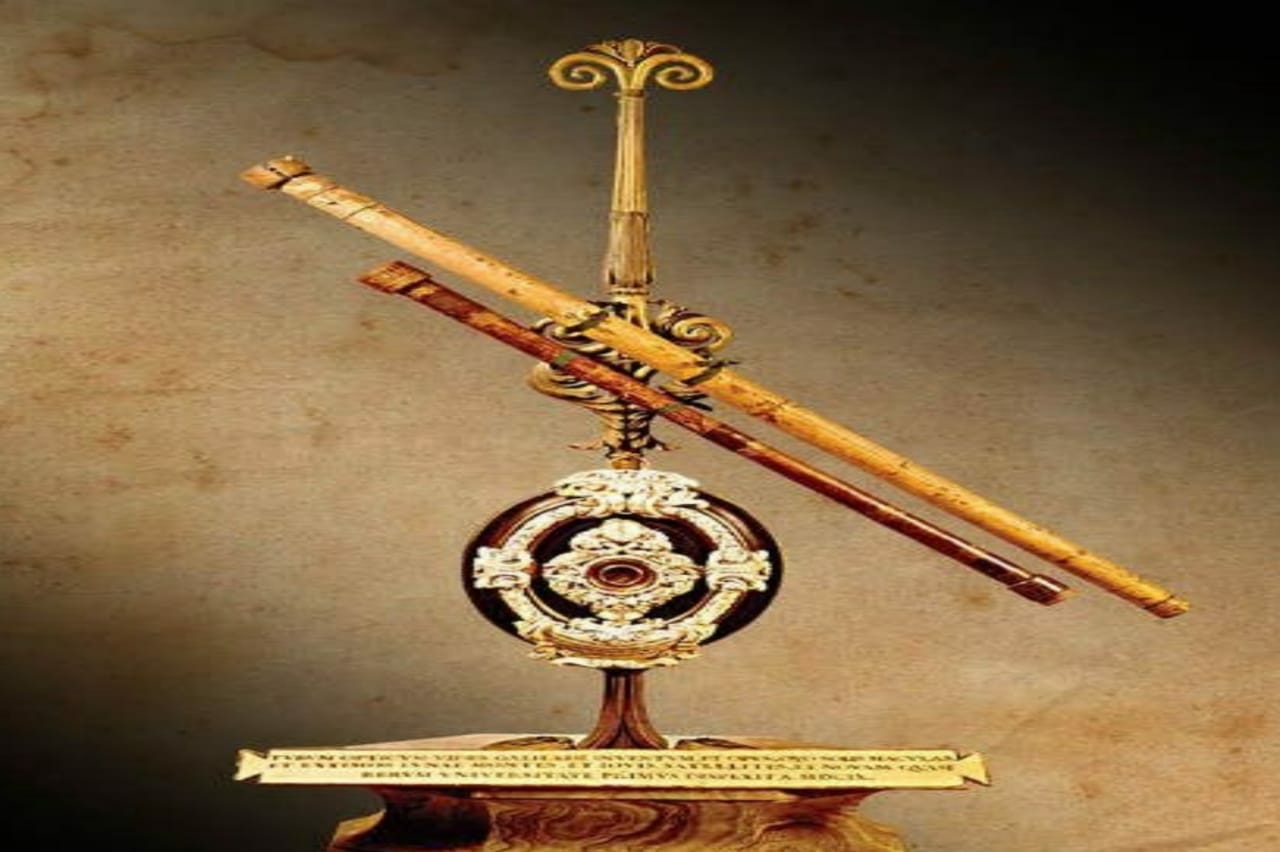
In 1609, Galileo learned that a scientist from Holland had discovered the best telescope. With the help of which far away things can be seen very easily. After this Galileo decided to make his own telescope and later he also made such a telescope. With the help of that telescope, started observing the galaxy at night. He observed the stars in Universe for a long time. During this, he searched for things.
He discovered the four moons of Jupiter. Apart from Jupiter, Galileo also studied other planets. Out of which he told about the Moon of the Earth that the place of the Moon of the Earth is not balanced. Rather, there are many pits on it. Along with that, he also told about the Kalao and the rings of the planet Saturn and also did a lot of study on it. Not only this, he also gave important information about the dark spots falling on the Sun.
These important discoveries of Galileo are the foundation of today’s modern astronomy. He also made an important contribution to the improvement of physics.
Galileo stated the law of inertia. Which later also became Newton’s first law of motion and in addition to this the first draft of the principle of relativity was also given by Galileo.
Albert Einstein
02.
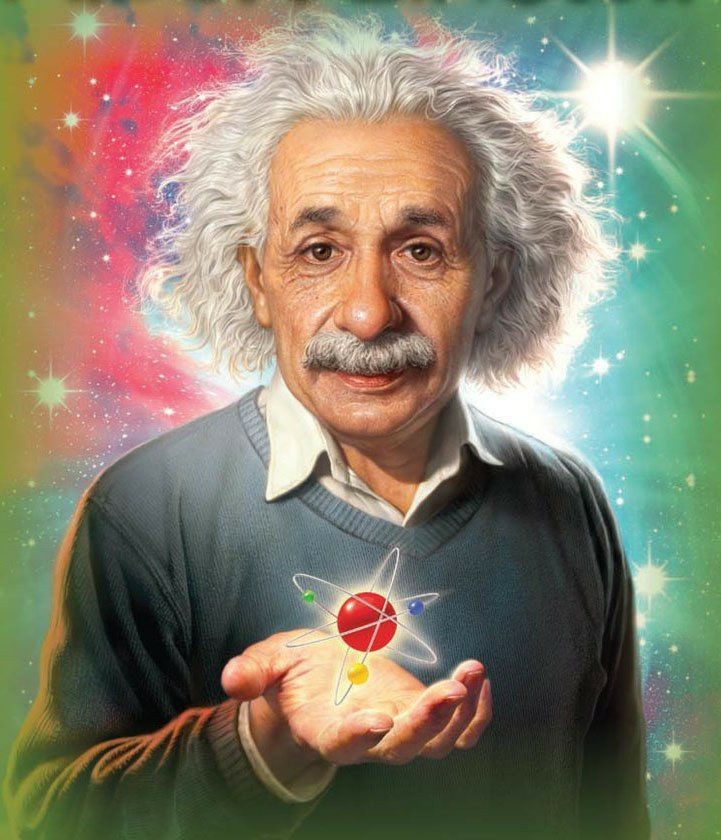
Albert Einstein this is such a name that on hearing it, theories like E=mc², Theory of Relativity and Space Time are remembered. Albert Einstein was a man who takes birth sometime in the centuries. He created panic in Physics with his theory. Albert Einstein was the only person who, challenging Newton’s gravity, gave a new theory on gravity. Often scientists do experimental first and give theory on the basis of the conclusion they have drawn on the basis of experimental. But Albert Einstein was a man who used to think on his own imagination. Then write the theory and execute the experiment based on it.
One thing exists in every particle of this universe, that is motion. From the very birth of the universe, there was speed. But intelligent man recognized motion by physical means about 300 years ago. When the world recognized speed with a new name Sir Isaac Newton. Newton’s laws of motion showed a new way of understanding this world. Newton said that any object can remain in a state of motion or motion as long as an external force is not applied to that object. The force applied on any object can increase or decrease its speed.
People understood the speed but a problem came up, how to determine this speed.

For example, suppose you are sitting on a railway platform and a friend of yours is sitting in a train and that train passes in front of you at a speed of 60 km/hr. As the train passed in front of you, you notice that your friend is also going with that train at 60 km/hr. At the same time your friend sitting in the train notices that other people are also sitting in the train and he is still. Meaning the speed of all the people inside is zero. That was the problem on whose estimate the value of the speed of the train should be determined. On the estimate of the person sitting in the train or on the estimate of the person on the platform. The answer was both are right in their place.
The value of the speed of any object depends on whether it is being estimated as stationary or in motion. Its conclusion was that motion is not absolute but relative. Simply put, the determination of speed depends on what it is relative to. Like the earth is rotating at its own distance, but we feel that the earth is stationary and we are also stationary ‘but when viewed from space, we will see the earth rotating round us. The Sun seems to be stationary from Earth, but from the point of view of the Milky Way, the Sun is revolving around the Milky Way.
In the 17th century, the first theory of relativity was given in physics. That stability will not change the laws of physics in the state of uniform motion (in simple language, if you are doing a physical experiment sitting on the platform and your friend sitting in a moving train is also doing the same experiment, then the results of both will be the same. This classical theory of relativity, which has been going on since Newton’s time, was challenged in the 19th century, when experiments were done on the principles of a scientist named Maxwell, then found such a motion exists in the universe. Which is not relative to anyone but absolute and its value is constant ‘that is the speed of light’ whose value is c=3×10⁸ ms -¹.

The end of the 19th century and the beginning of the 20th century are special from the point of view of science. Because this was the period when revolutionary principles were included in physics and this was the period in which Einstein made his contribution to the world of physics. The constant speed of light stirred Einstein’s mind. He was a man whose concepts were born in the imagination and proved by mathematical combinations. On which scientists later experimented, they would have found it right.
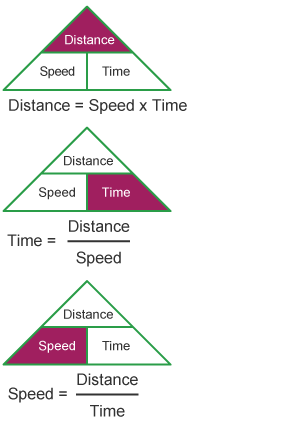
Einstein imagined what is the reason for this. In each case the speed of light is always constant. He imagined what would happen when he trailer at the speed of light. Along with visualizing, he also took into account the formula for speed.
speed is equal to distance upon time
The speed of anything he found in his imagination depends on the ratio of distance and time. If the speed of light is constant, it means that there is no change in speed, but distance and time are changing themselves. Einstein said that nature does not allow its fundamental laws to be broken but defends them and one such fundamental law of nature is the speed of light which c= 3×10⁸ ms-¹ which never changes and changes space and time to keep the speed of nature the same.

Let us try to understand Einstein’s space and time concept in simple language. For this we revisit our old example, suppose your friend is sitting in a train traveling at the speed of light. He has a watch and you are sitting on the platform and you also have a watch. When your friend is sitting on the train, the time of your watch and the time of your friend’s clock are the same, now you are standing on the platform and looking at the train traveling at the speed of light in which your friend is sitting. You saw a train traveling at the speed of light. Its length has become too short and the clock your friend has on the train is running at a much slower rate than your watch time: this is because nature is protecting her fundamental laws from breaking, this Because of this, both space and time changed to keep the speed of the train equal. That is, both the length of the train and the time of the clock in the train changed.

 Sci
Sci 